

How to Measure a Driveway for New Gates
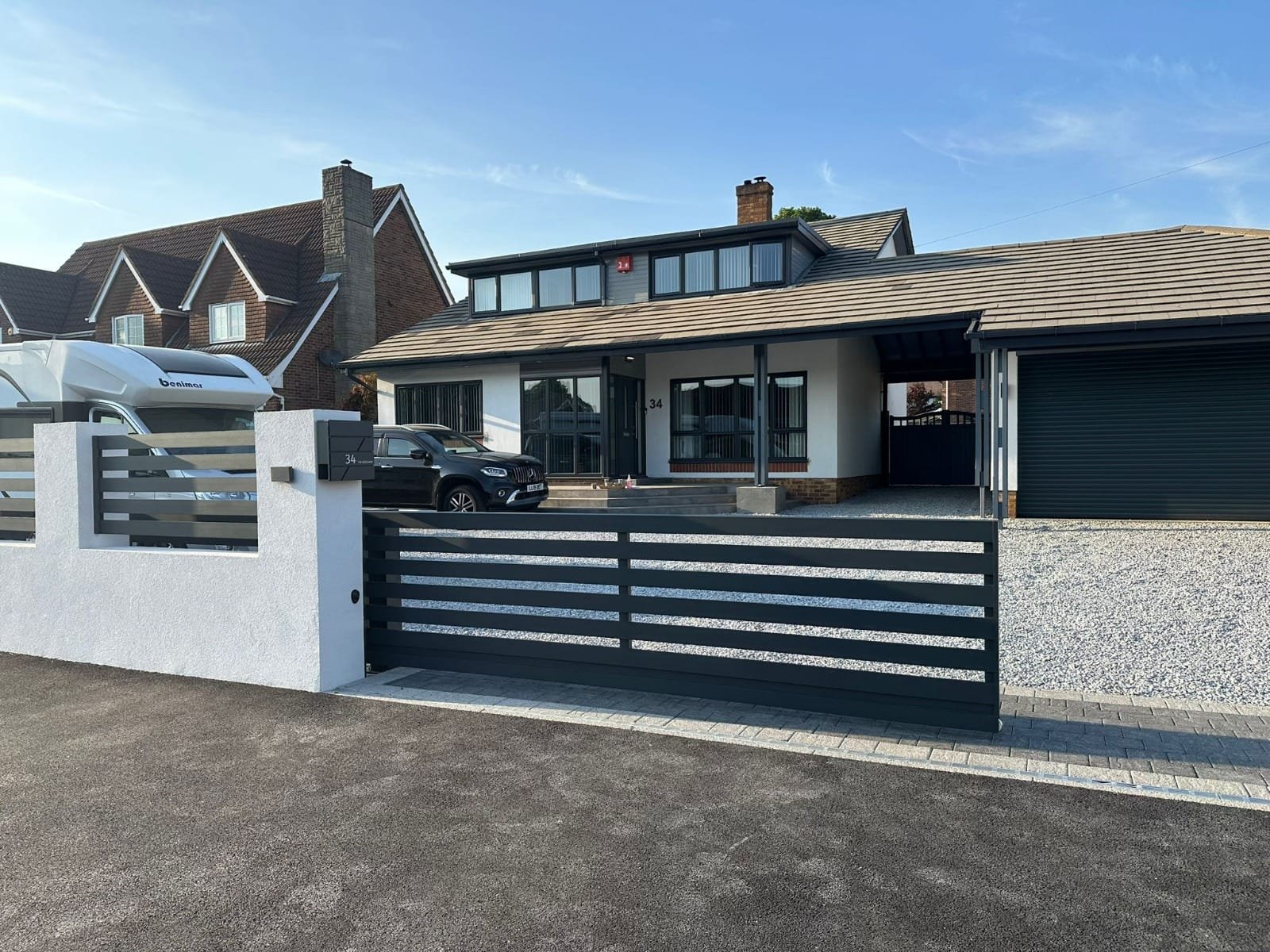
Most quoting delays come down to missing measurements. Five numbers and two photographs are usually enough for us to price a gate accurately and tell you whether swing or sliding is the right choice.
1. The clear opening width
Measure between the faces of the existing piers or the intended post positions, at ground level and again at around a metre high. If the two differ, tell us — walls lean more often than people expect.
2. The height you want
Standard residential driveway gates commonly sit between 1.5 m and 1.8 m. Higher gates give more privacy and screening; check any planning restrictions where the boundary meets a highway.
3. The fall of the ground
Place a long level across the opening and measure the gap under each end. A driveway rising away from the road limits how far a swing leaf can open before it grounds — a common reason we recommend sliding instead.
4. Swing clearance or sliding run-back
- For swing gates: measure the clear space behind the opening across the full leaf arc.
- For sliding gates: measure the run-back along the boundary — typically the opening width plus a further allowance for the counterbalance.
- Note any obstacles: steps, drains, planting, parked cars, an inward-opening front door.
5. Power and access
Tell us where the nearest mains supply is, and whether the driveway surface is already finished. That single answer often decides whether automation is a simple job or one that needs ducting planned around the surface.
Frequently asked questions
- Do I need planning permission for driveway gates?
- Requirements depend on height and whether the boundary adjoins a highway. Check with your local planning authority; many domestic gates fall within permitted development.
- What if my opening is not square?
- That is normal. We manufacture to your measurements and can rake or step the gate to follow the ground.
- Do you carry out a site survey?
- Yes — we survey before manufacturing so the finished gate fits your opening exactly.