

Automatic Gates UK: The Complete 2026 Buyer's Guide
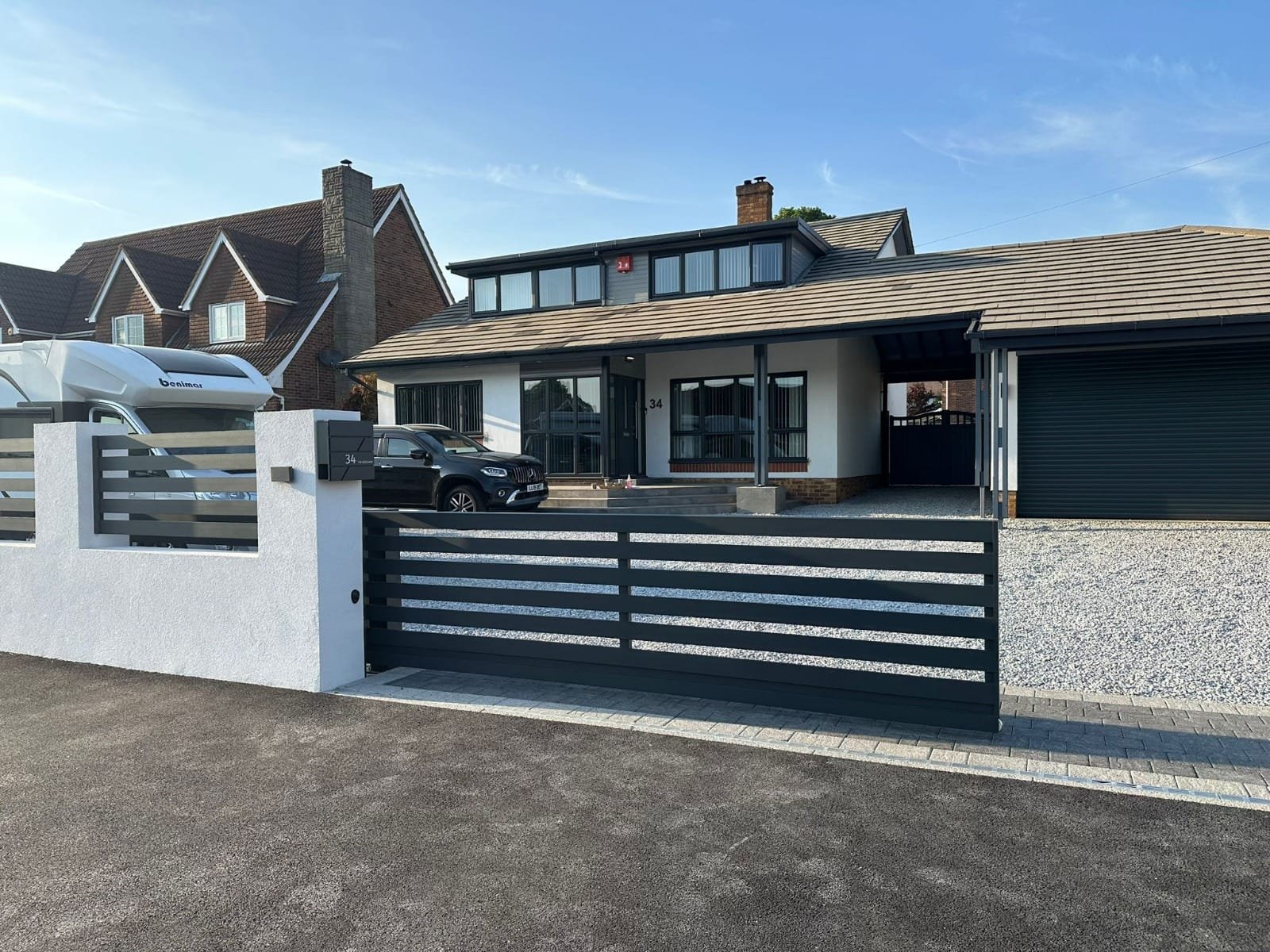
Automatic gates are the single biggest upgrade most driveways ever get: better security, no getting out of the car in the rain, and an entrance that sets the tone for the whole property. But the quotes people receive vary wildly, and it is rarely obvious why.
This guide explains what actually drives the cost and the long-term reliability of automatic gates in the UK, based on the surveys and installations we carry out at AlumaGates.
What makes a gate 'automatic'
An automatic gate is simply a made-to-measure gate leaf paired with a motor, a control board and a set of safety devices. The gate does the work of looking good and keeping the driveway secure; the automation decides how pleasant it is to live with.
Because the motor has to move the leaf thousands of times a year, the weight and rigidity of that leaf matter more than any other single factor. This is why we build in aluminium: it does not rust, it holds its shape, and it puts a fraction of the load on hinges, posts and motors compared with steel or timber.
Swing or sliding: choosing the right automation
- Swing automation suits level driveways with room for the leaves to arc inwards. Underground motors keep the hardware hidden; articulated arms are quicker to retrofit.
- Sliding automation runs one leaf along a track or cantilever beam. It is the answer for short approaches, sloping ground and very wide openings.
- Openings wider than roughly 4 metres are usually easier and cheaper to automate as a sliding gate than as a pair of heavy swing leaves.
- If the driveway slopes away from the road, sliding is almost always the correct engineering answer — a swing leaf would ground out as it opens.
What automatic gates cost in the UK
There is no honest single figure, because the gate and the automation are priced separately and both scale with size. The variables that move the number are: the opening width, the collection and infill you choose, whether the leaf is solid or slatted, the motor type, the number of safety devices, and whether mains power already reaches the gate posts.
The costs people forget are the groundworks and the electrics: ducting under the driveway, a fused spur at the posts, and gate stops set into the surface. We include these in the survey so the quote you get is the number you pay.
Safety is not optional
Powered gates are machinery, and UK installations are expected to be risk-assessed and fitted with the right protection. Every AlumaGates automation package includes safety photocells, force limiting and soft start/stop, with safety edges added where the risk assessment calls for them.
Every kit also carries a manual release key so the gate opens by hand in a power cut, and battery back-up can be specified if you want it to keep operating during an outage.
Questions to ask before you sign
- Is the gate leaf aluminium, and is the finish a marine-grade powder coat?
- Which motor is specified, and what duty cycle is it rated for?
- Are photocells, force limiting and a manual release included in the price?
- Who runs the mains supply and the ducting — you, or the installer?
- Is there a matching pedestrian gate and fencing available in the same design?
Frequently asked questions
- How long does it take to install automatic gates?
- Most residential installations are completed in one to two days on site once the posts and power supply are prepared. Manufacturing the gate to your measurements is the longer part of the timeline.
- Can my existing gates be automated?
- Often yes. We check the weight, hinges and posts on site. Light, rigid aluminium leaves are the easiest to automate reliably; heavy timber or corroded steel frequently is not worth motorising.
- Do automatic gates add value to a property?
- They improve kerb appeal and security, which agents consistently list among the features buyers notice first at the boundary of a property.