Automatic Gates · 6 min read · Updated 2 September 2026
Gate Automation Safety in the UK: What a Compliant Install Includes
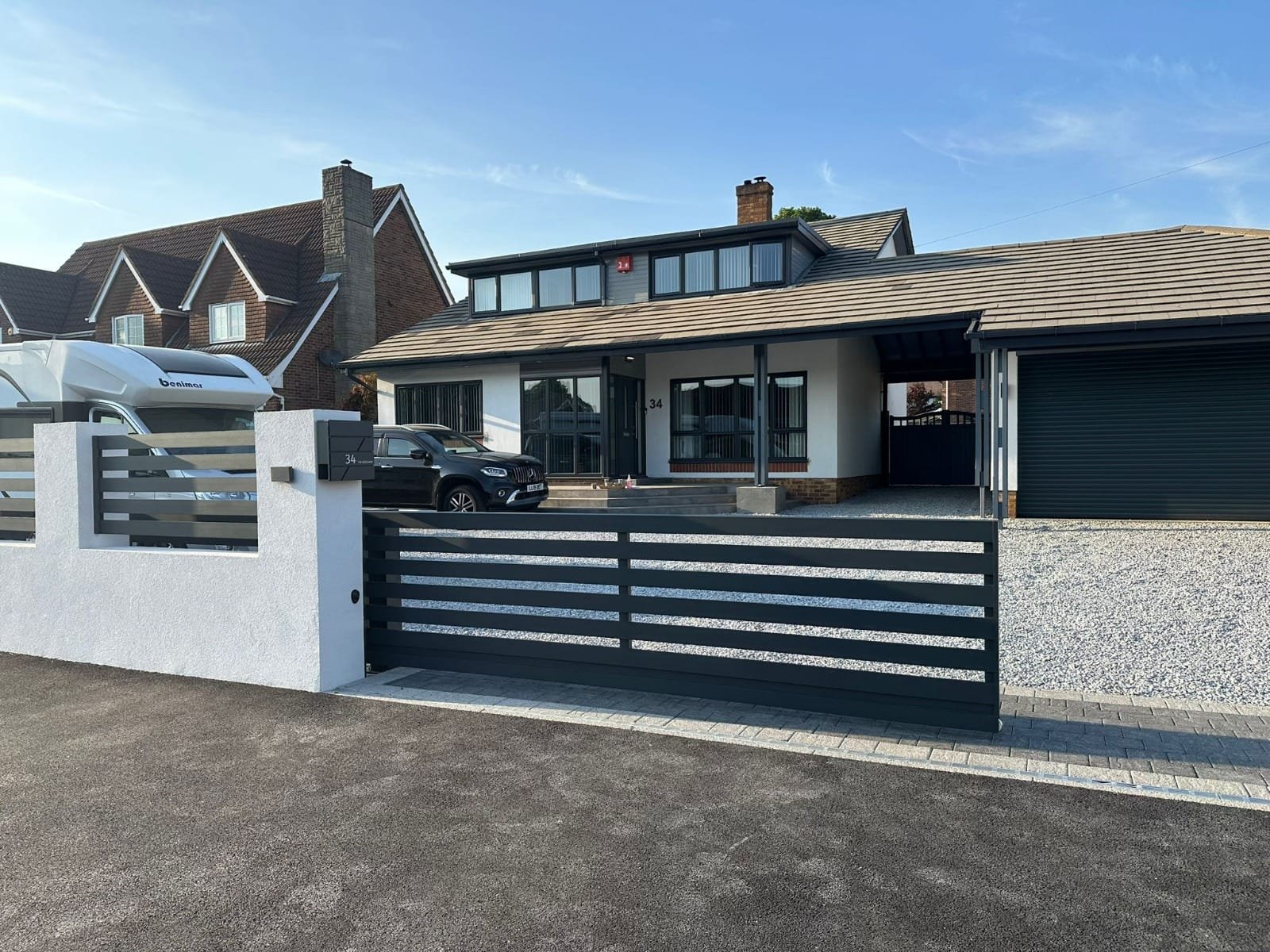
Powered gates in the UK are treated as machinery, and the responsibility for a safe installation sits with whoever supplies and commissions it. That is a good thing: it is also the clearest way to tell a serious installer from a cheap one.
What a compliant install includes
A documented risk assessment of crushing, shearing and draw-in points.
Photocells covering the closing path, and additional beams on wide openings.
Force limitation set at the control board and measured, not guessed.
Safety edges where a trap point cannot be designed out.
A manual release that works without tools and is explained on handover.
Warning signage and a handover pack with the maintenance schedule.
Design out the risk first
The best safety measure costs nothing: choose a gate arrangement that removes trap points. Keeping a consistent gap between the leaf and the post, avoiding closing gaps against walls, and preferring a lighter aluminium leaf all reduce the forces involved before any electronics are added.
Questions to ask any installer
Will you carry out and leave me a written risk assessment?
How will you measure the closing forces on handover?
What safety devices are in the quoted price, not as an option?
Who services the gate, and how often do you recommend it?
Frequently asked questions
Do automatic gates need to be certified?
A powered gate installation must be safe and supplied with the correct documentation, including a risk assessment and handover information. Ask for these in writing before you accept a quote.
Are photocells enough on their own?
Not always. Photocells cover a beam, not the whole trap point, so wide or heavy gates often need additional beams or safety edges.
Can existing automation be brought up to standard?
Usually yes. We can survey an existing installation and add the missing safety devices and force settings.
Begin Your Project Today With a Team You Can Trust
Whether you're planning a new metal garage, gate, shed, or outdoor structure, AlumaGates is here to guide you every step of the way. We focus on clear communication, dependable service, and delivering durable results that meet your expectations.